

Aspen drone videography gets requested far more often than it actually gets flown. The appeal is obvious. A wide push over the valley, the venue below, guests spread across a lawn at golden hour. In practice, three separate rulebooks decide whether that shot happens, and none of them care about your timeline. This post covers what is allowed near Aspen, what is not, and when the footage is worth planning around.
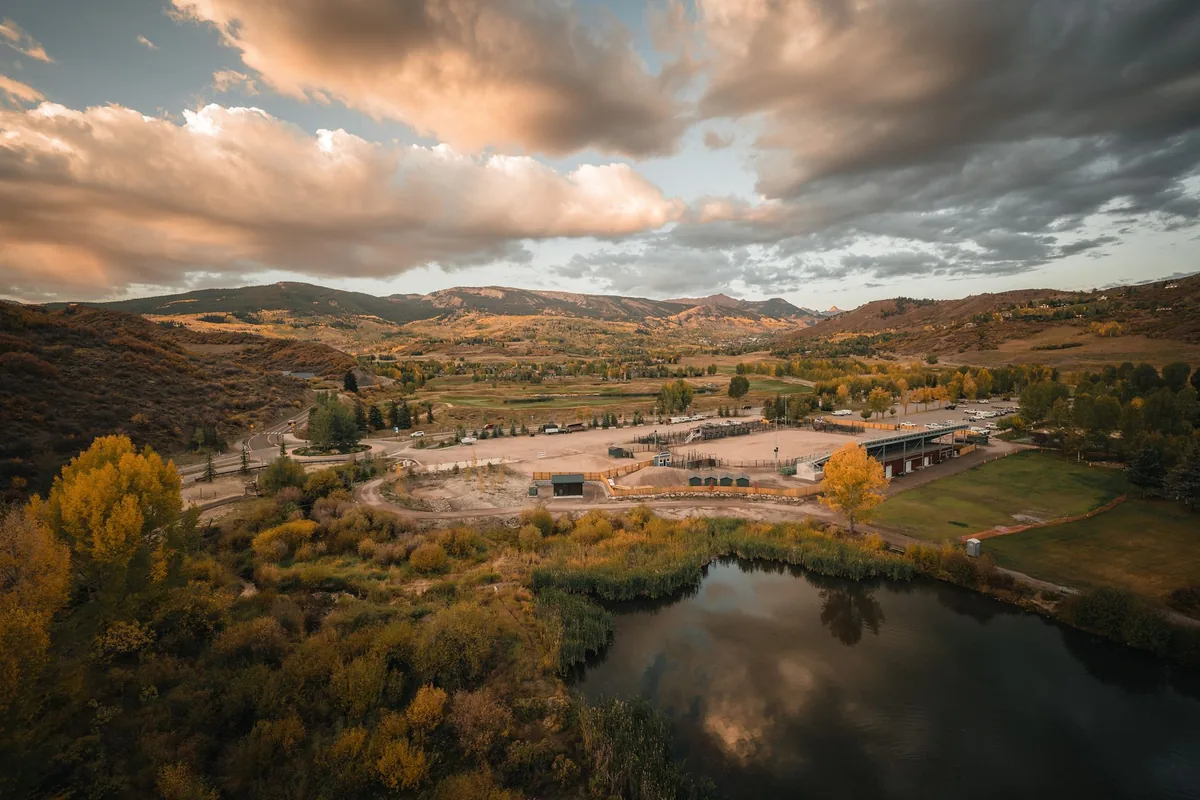
Where Aspen Drone Videography Is Actually Allowed
Three layers stack on top of each other. Aspen drone videography has to clear all three, and any one of them can end it.
First, the FAA. Commercial work runs under Part 107, so the pilot needs a remote pilot certificate. Aspen and Pitkin County Airport sits inside Class D airspace, roughly a four mile radius around the field. That ring covers a meaningful share of town. Flying inside it requires airspace authorization through LAANC.
There is also a rule that surprises hosts more than any other. Part 107 prohibits flying over people who are not directly participating in the flight. The exceptions are narrow. They sit under a covered structure, or the aircraft meets specific weight and injury criteria. So a drone generally cannot hover above a seated ceremony or a crowded cocktail hour.
Second, the land manager. The Maroon Bells-Snowmass Wilderness carries congressional designation, and drones cannot take off, land, or operate inside it. No commercial drone use is authorized there at all. This matters because Maroon Bells is the single most requested aerial location in the valley, and the answer is always no.
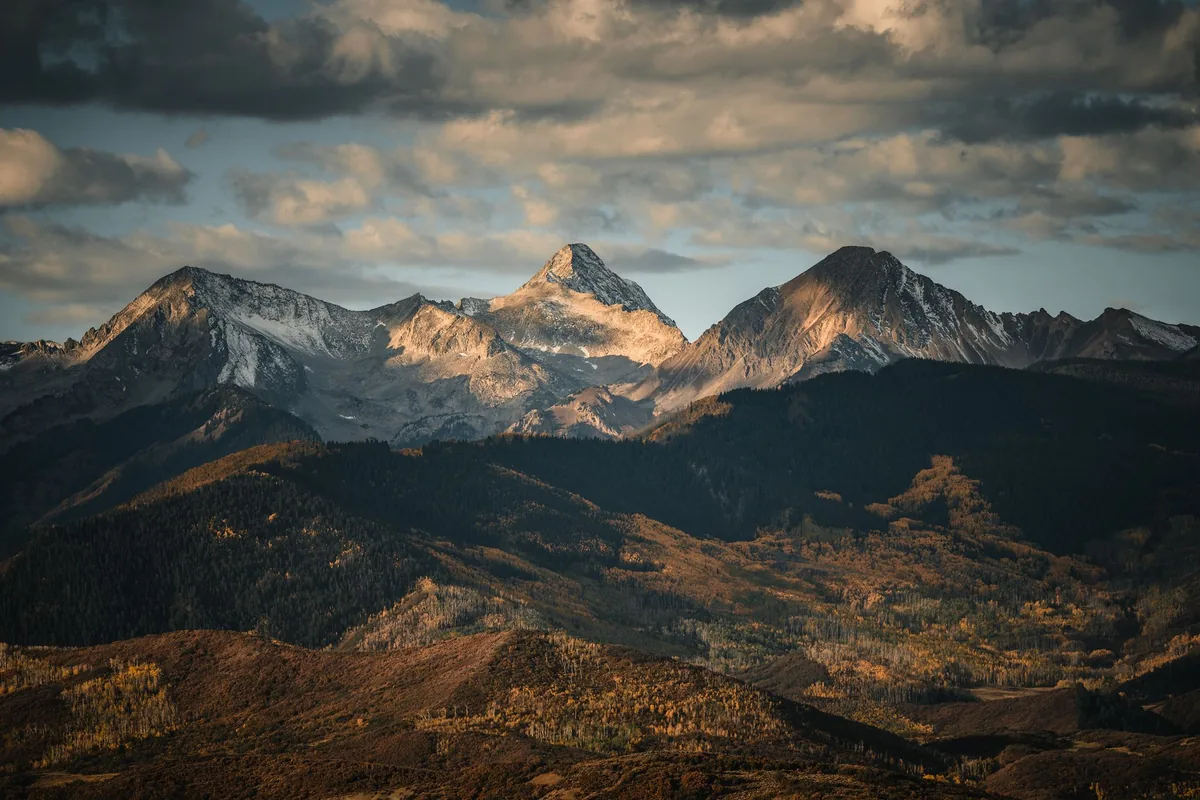
Third, the venue. Aspen Skiing Company prohibits drones over Aspen Mountain, Aspen Highlands, Buttermilk, and Snowmass, including the airspace above them, regardless of where the pilot launched. Private ranches and hotels set their own policies too, and plenty of them decline.
Weather and Altitude Limits on Drone Footage
Even with permission in hand, conditions decide the rest. Aspen drone videography runs into altitude limits that flatland operators never think about.
Thin air does real damage to performance. Above 8,000 feet the rotors work harder, flight times shorten, and the margin for error narrows. A battery rated for 20 minutes often yields closer to 12 usable ones.
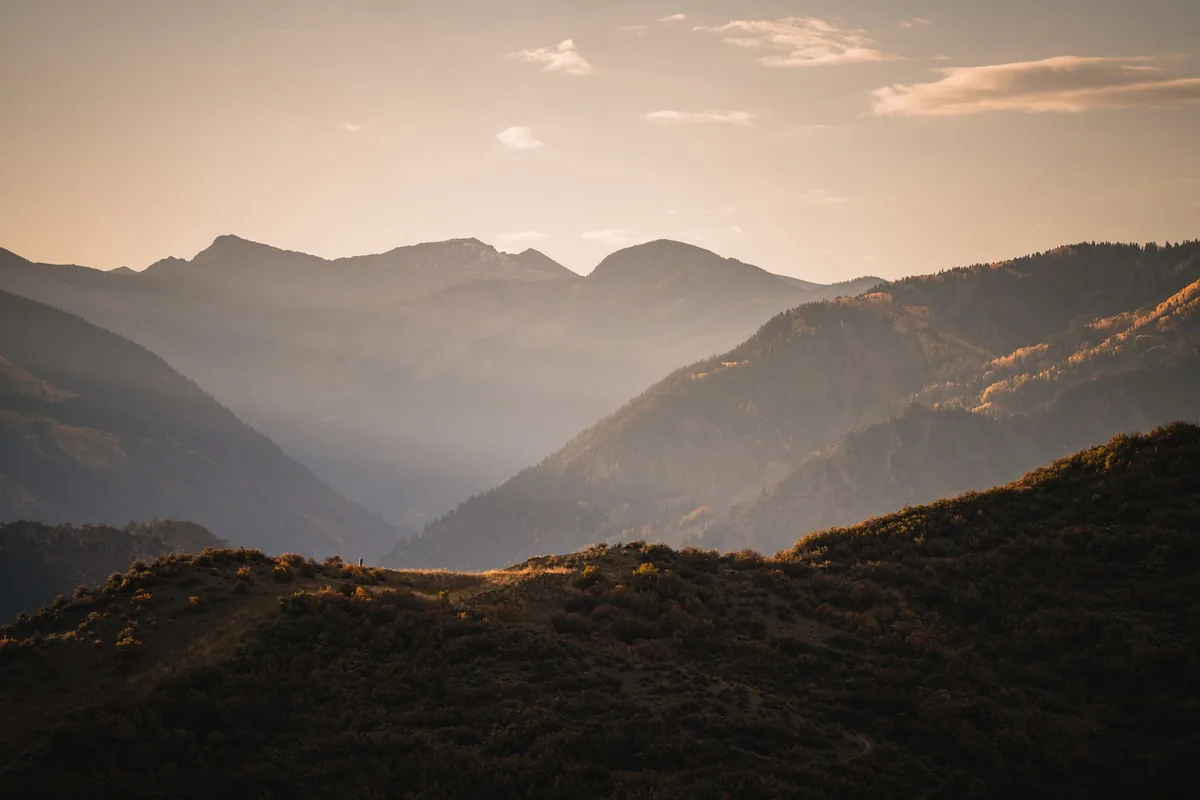
Wind matters more than most people expect. Valley wind builds through the afternoon, and ridgelines accelerate it further. Winter adds another problem, because cold weather cuts battery capacity quickly.
Summer brings its own limit. Afternoon storms move in fast, and lightning ends a flight immediately. Winter brings the opposite constraint, since usable light disappears behind the ridgelines early. Part 107 also caps flight at 400 feet above ground level, which is lower than the mountains around you.
When Drone Footage Earns Its Place
Aerials work when the location is genuinely part of the story.
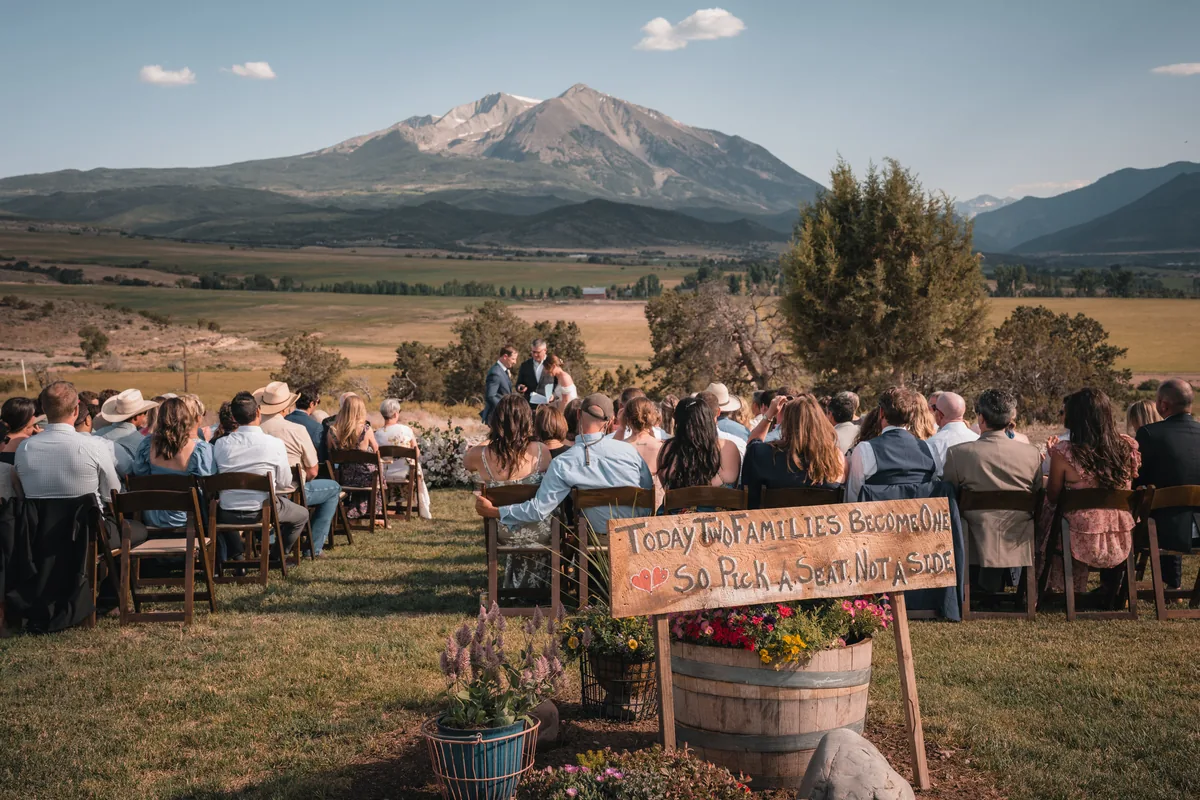
A ranch spread across a valley floor. A tented reception on a large footprint. A ceremony site people traveled a long way to reach. In those cases one wide shot establishes something no ground camera can, and it earns the twenty seconds it occupies.
Ski and mountain content is the clearest case of all. When terrain is the subject rather than the backdrop, aerial movement does work that a handheld camera cannot. Our approach to ski and vacation films leans on that regularly.
Aerials stop working when they become the point. Orbiting a couple who are standing still looks like every other orbit. Cutting to a wide aerial every fifteen seconds turns a recap into a property listing. In a two minute film, one or two aerial shots usually carry the whole idea.
How We Plan Aspen Drone Videography
We treat Aspen drone videography as a bonus, never a promise. That framing matters, because a shot list built around aerials falls apart the moment wind picks up.
We confirm restrictions early, in writing, with the venue. Then we check airspace and temporary flight restrictions again the week of the event, and again that morning. Aspen draws enough visiting dignitaries that temporary restrictions appear with little warning.
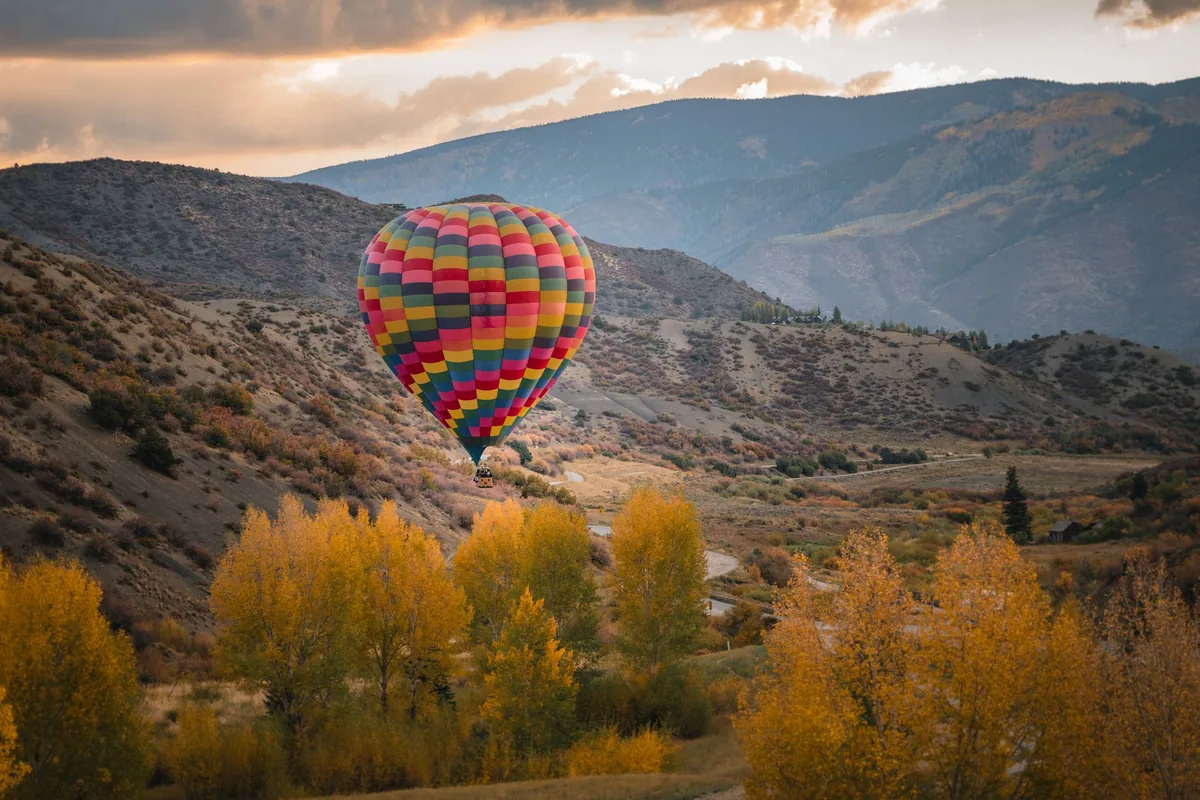
We also build a dedicated window into the timeline rather than squeezing flights between other coverage. Event timelines run slower than anyone expects, and padding is what protects the rest of the day. A rushed launch is how equipment breaks and how guests end up standing around waiting.
Finally, delivery speed affects planning. If aerials need to appear in a next morning edit, that coordination adds real cost. Because of that, we confirm the deadline before the drone ever comes out of the case.
FAQ About Aspen Drone Videography
Can you fly at Maroon Bells?
No. Wilderness designation prohibits it, and no commercial exception exists.
Can you fly over our ceremony?
Generally no. Guests seated outdoors are not participants, so the aircraft has to stay off to the side.
Do we need a permit?
Near the airport you need airspace authorization. You also need venue permission, and public spaces may require a separate local permit.
What cancels a flight?
Wind, precipitation, a temporary flight restriction, or a venue changing its position on the day.
Is it worth adding?
Aspen drone videography earns its cost when the property or the terrain is genuinely part of the story. Otherwise the budget does more good elsewhere.
If you are weighing aerials for a specific date, our event videography coverage explains how we structure a day. Our film work shows how these shots land in a finished edit.


