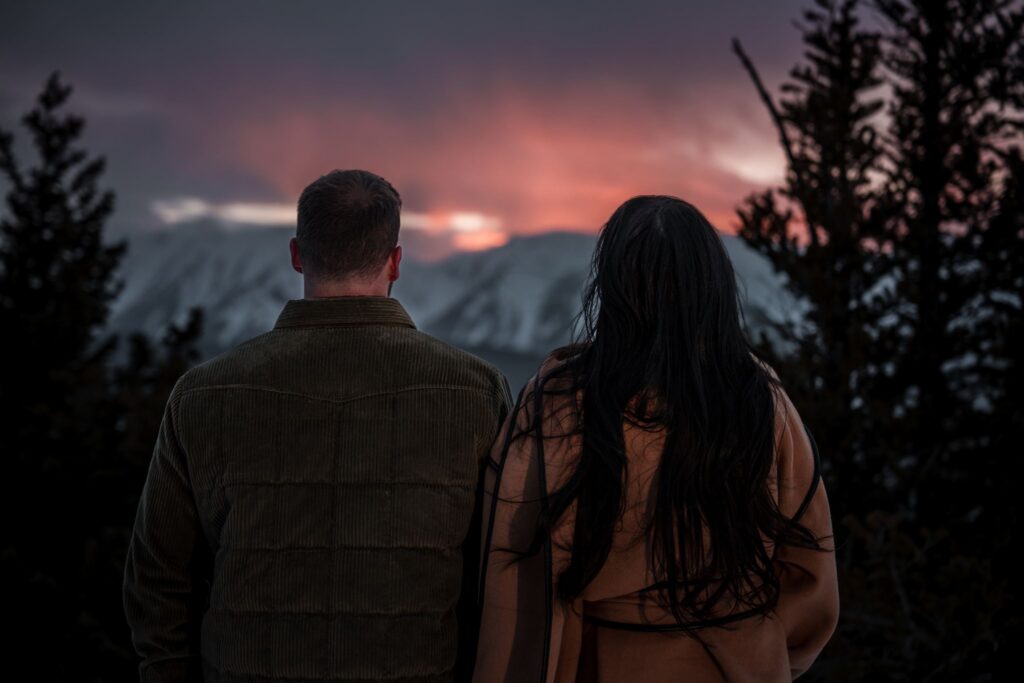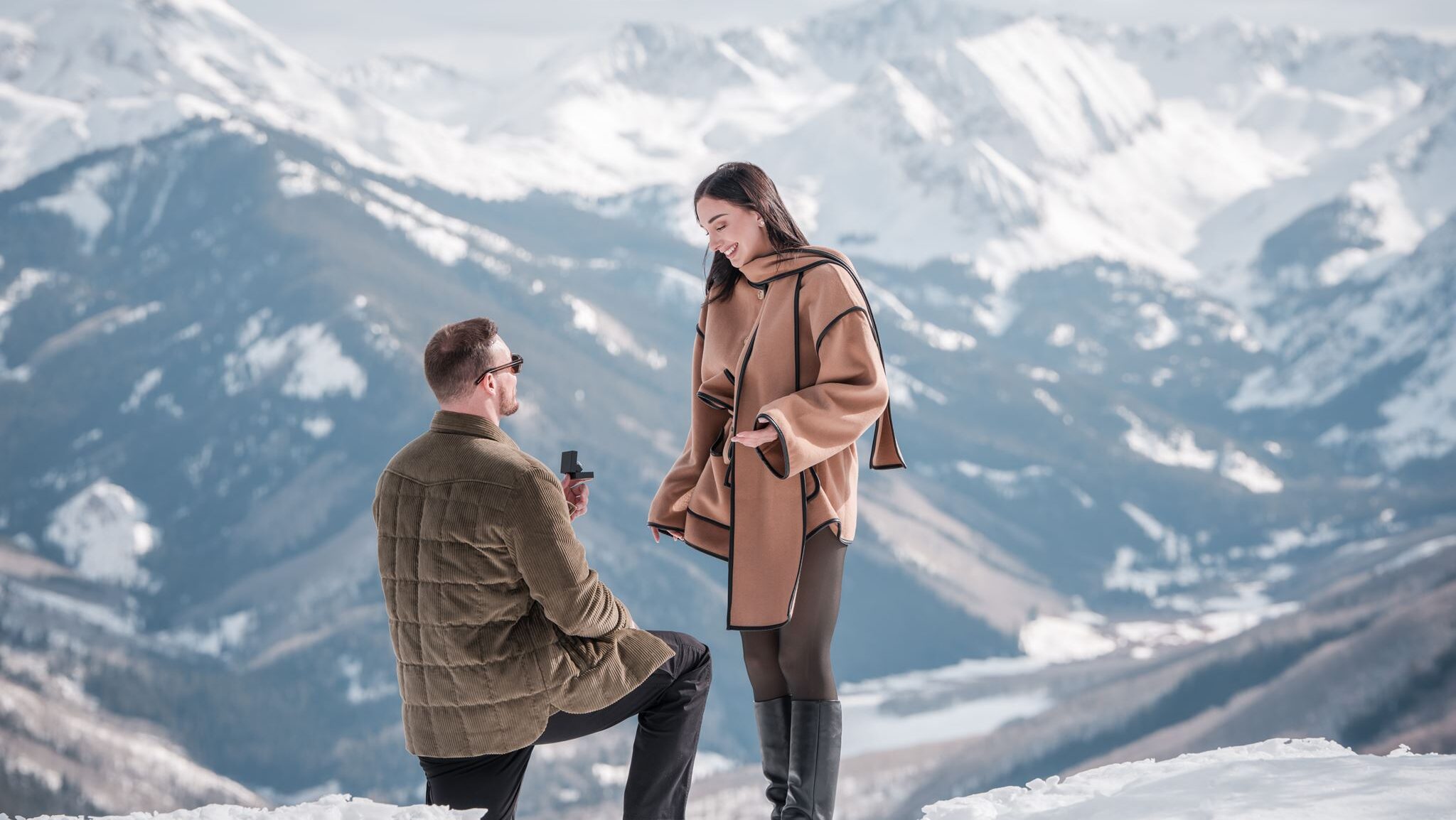
Working as an Aspen proposal photographer has a way of clarifying what actually matters in these situations, and it is rarely what people spend most of their time worrying about. This post is specifically about the logistics of hidden coverage — how to set it up, what to realistically expect, and how to avoid the decisions that create the most friction on the day itself. It is not about rings, scripts, or picking the most scenic spot in the valley. That is a different conversation.
Why Aspen proposals are logistically different from other locations
Most destination proposals involve some combination of distance, terrain, and access that is easy to underestimate from a phone screen. In Aspen, that gap between what looks simple on a map and what is actually involved on the ground tends to be significant.
Distances here are farther than they appear. Furthermore, getting to a location worth proposing at often requires planning that creates real tension between surprise and setting. You can propose at a truly remote, dramatic spot above the valley floor. However, getting there undetected and staying undetected involves a level of coordination that does not just sort itself out.
The tradeoff is real. The more spectacular the location, the more logistically involved the approach. That does not mean it is not worth it. It just means it needs to be thought through in advance, not improvised on the morning of.
Additionally, the weather in this environment moves fast. Transportation windows are real. And depending on the season, your light window may be shorter than you expect. Getting a proposal photographer involved early helps solve for all of these variables before they become problems day-of.
How hidden coverage actually works for an Aspen proposal
Hidden coverage is straightforward in concept and genuinely involved in execution. The goal is to have your Aspen proposal photographer positioned and unseen before the couple arrives. Therefore, that requires knowing the exact approach path, the likely stopping point, and which direction the light will be coming from.
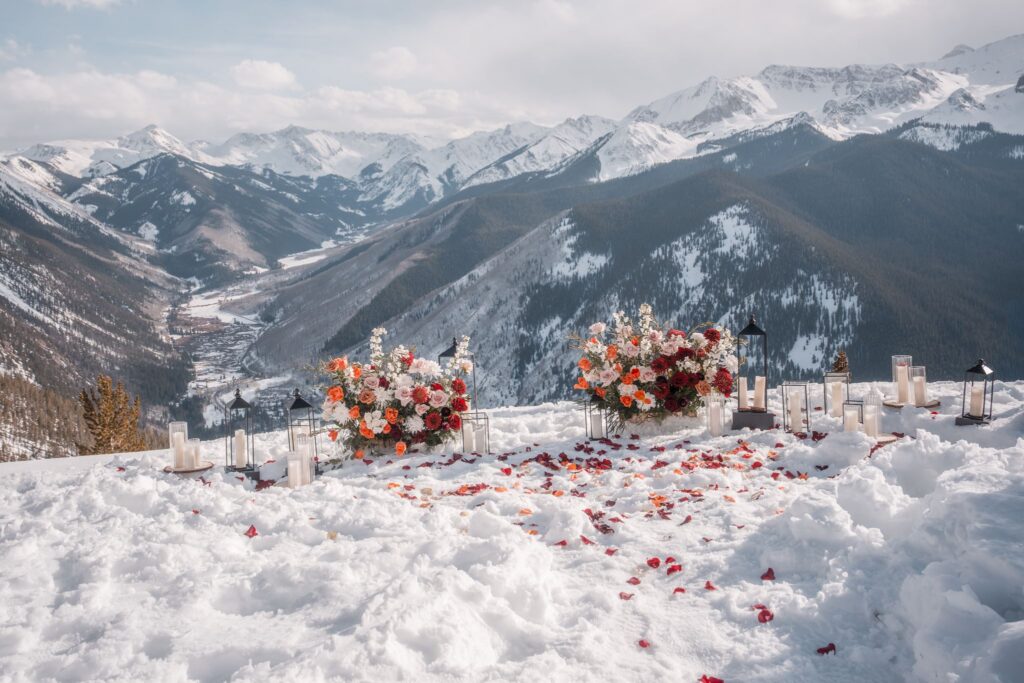
Before any proposal, the scout happens first. The location gets walked, the angles get evaluated, and then a walkthrough video goes to the person proposing. That video is overlaid with Google Maps so there is no ambiguity about what they will see when they arrive and where they should stop. The point is that by the time the moment arrives, they already know what it looks like. Consequently, they can be present in the moment instead of scanning the area trying to orient themselves.
That walkthrough video serves a specific purpose. It means the proposer does not have to think about logistics when it matters most. They can focus on the moment because the logistics are already handled.
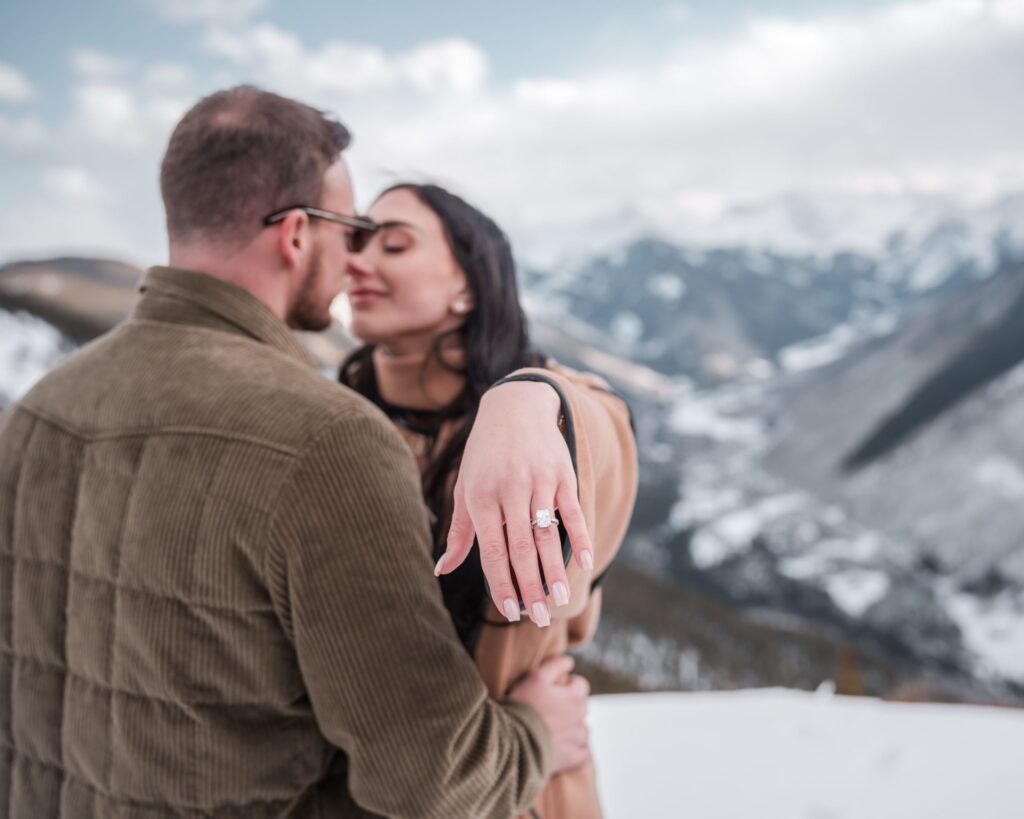
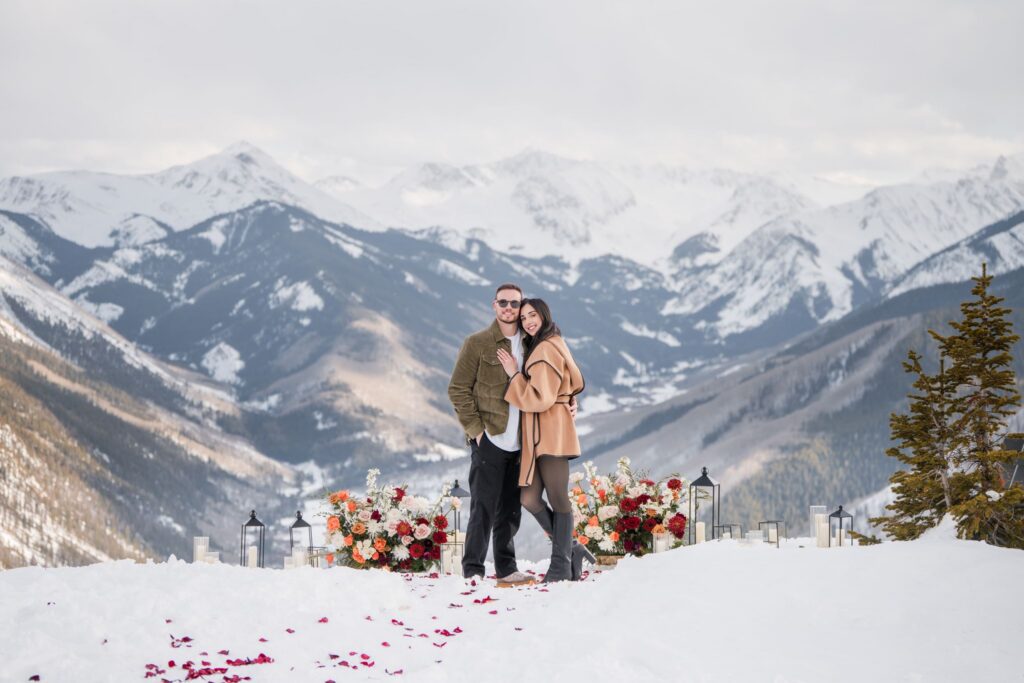
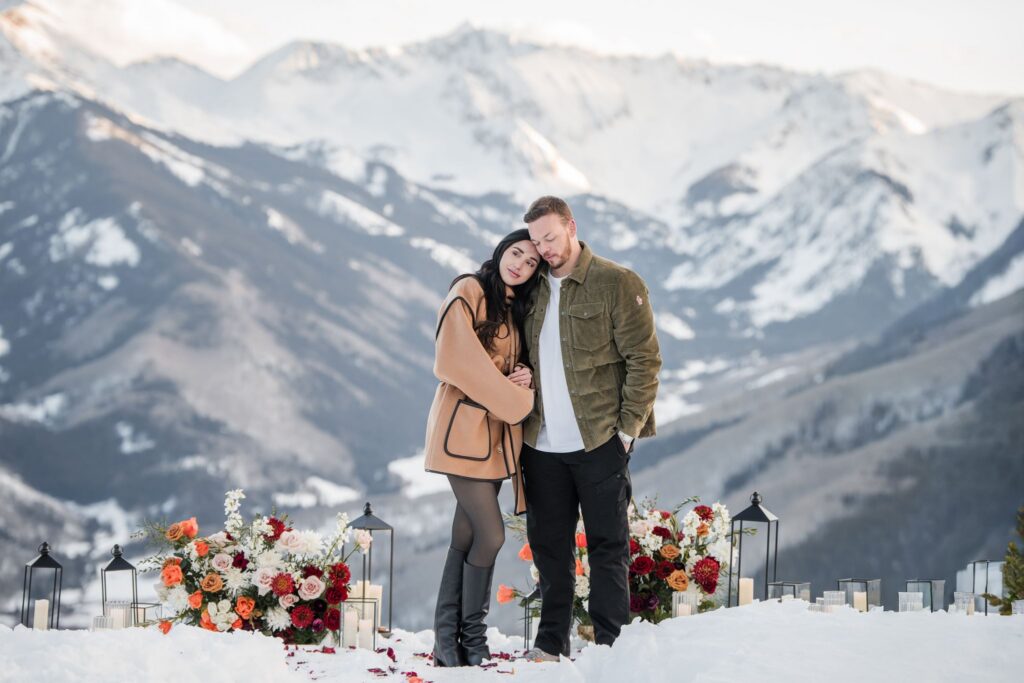
For an event like this one at Smith Cabin Aspen, the setup involved florals by Gather and Bloom and catering from Chef Mitch Holdsworth. That means there were multiple vendor movements to coordinate well before the couple arrived. This kind of multi-vendor setup is increasingly common in Aspen proposals, and it adds to the case for booking coverage early and communicating clearly across all parties.
Timing windows and seasonal considerations for proposals in Aspen
Season shapes everything about how an Aspen proposal photographer executes it. In winter, you are working with shorter daylight windows, colder temperatures that affect how long couples can comfortably stay in a location, and snow conditions that change access to certain areas.
In summer, afternoon storms are common above treeline. A proposal planned for late afternoon on an exposed ridge needs a weather contingency. Not because it will necessarily storm, but because it might, and knowing the backup in advance is worth the conversation.
The most consistent timing recommendation is to aim for golden hour windows regardless of season. However, golden hour in Aspen sits behind ridgelines that cut light earlier than you might expect. In winter, that can mean mid-afternoon. In summer, it extends later. Either way, this is worth factoring into the plan when you choose a location.
Proposals involving gondola access, hiking, or private venue setups may also have operational timing constraints that narrow your window further. As a result, it is worth building in time rather than running tight.
What people get wrong about the weather forecast
The mountain weather forecast is not nearly as predictive as the apps make it seem. Moreover, that uncertainty cuts in both directions. Storms that look certain on a radar sometimes move through quickly. Overcast mornings regularly clear by early afternoon. A forecast that looks bad the night before may not materialize at all.
The pattern that comes up repeatedly is that the proposing partner spends significant energy worrying about weather and pushing toward changes in the plan, and ultimately the weather cooperates. The proposal happens, the light is fine, and the stress beforehand was not proportional to what actually unfolded.
That is not an argument for ignoring weather. It is an argument for having a contingency plan and then trusting it. Build the backup in advance. Then, unless conditions are genuinely unsafe, hold the plan. The anxiety around weather is usually worse than the weather itself.
How far in advance to book an Aspen proposal photographer
For proposals during peak ski season — roughly mid-December through March — and during the summer high season of July and August, booking two to three months out is realistic. For holiday weekends and Fourth of July specifically, earlier is better.
Shoulder season proposals in late spring or fall tend to have more calendar flexibility. However, they also come with the most weather variability of the year. In other words, flexibility in scheduling does not always mean flexibility in conditions.
The scouting and walkthrough video process takes time to do well. As a result, the earlier you book, the more time there is to work through location options, coordinate vendors if involved, and make sure the day-of logistics are genuinely handled rather than approximately handled.
You can learn more about what photo and film coverage looks like for proposals or reach out directly to talk through your specific situation.
What to expect on the day of your proposal
The day-of experience is generally calmer than people expect, partly because the groundwork is already done. The photographer is already on location. The approach path is already understood. The proposer already knows what the space looks like from the walkthrough video.
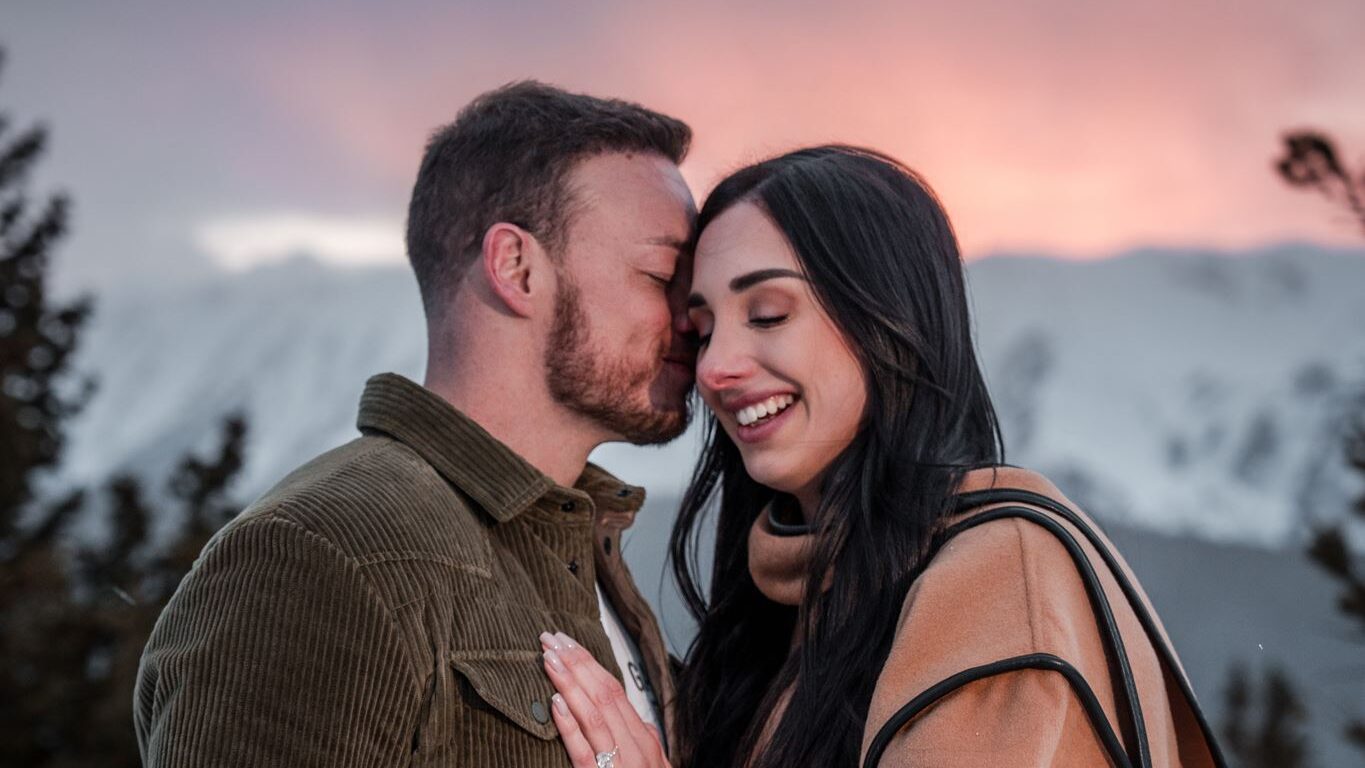
What remains is the moment itself. The job of hidden coverage is to stay out of the way of that moment and document it as it actually unfolds — not to stage it or redirect it. The images from proposals tend to be the most natural of any coverage because the couple is not performing for a camera they know is there.
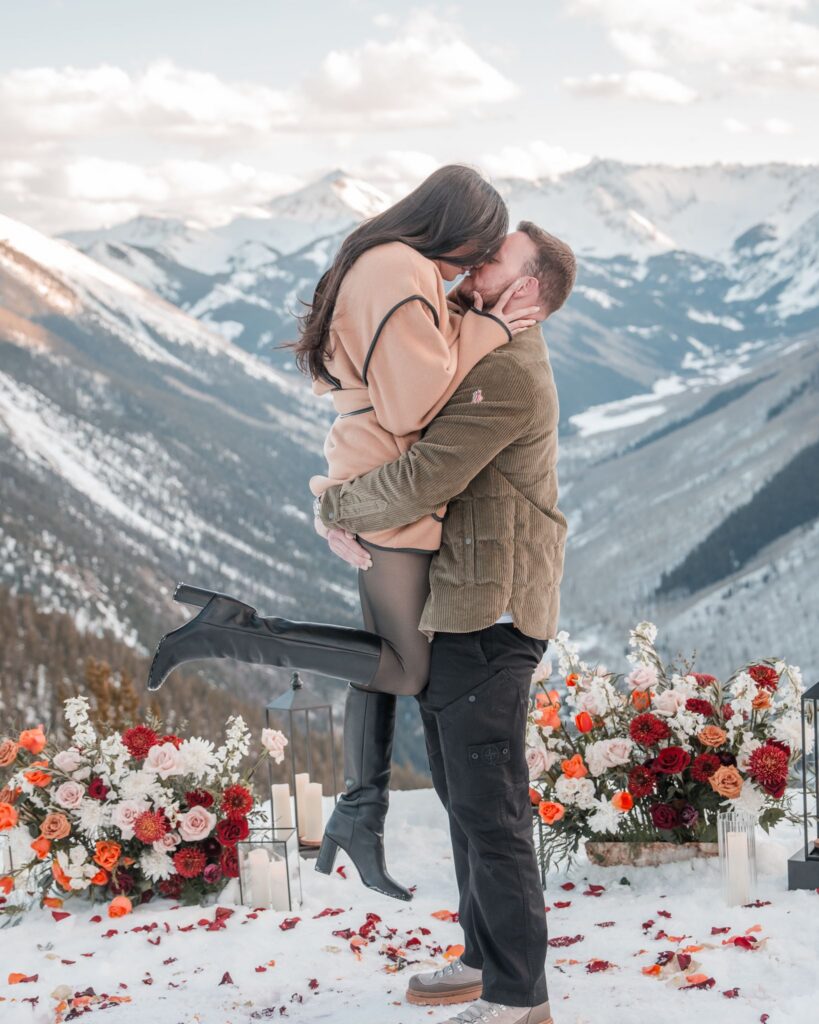
Once the proposal happens, the coverage shifts into more traditional portrait work. At that point, the location, the light, and the setting all become collaborative. That transition is often when couples relax into the environment and the images start to reflect where they actually are instead of what they were feeling in the moment beforehand.
Frequently asked questions about Aspen proposal photography
How do you stay hidden during a mountain proposal?
The location is scouted before the couple arrives. Positioning is based on approach path, terrain, and light direction. The proposer receives a walkthrough video in advance so arrival timing is predictable.
What happens if the weather is bad on the day of my proposal?
A contingency location or timing window is built into the plan in advance. Mountain weather moves fast and often improves unexpectedly — most proposals proceed close to the original plan.
How far in advance should I book a proposal photographer in Aspen?
For peak ski season or summer high season, two to three months out is a reasonable window. Holiday weekends book earlier. The scouting process works better with more lead time.
Does the location choice affect how hidden coverage works?
Yes. More remote or elevated locations require more coordination and approach planning. There is a real tradeoff between access and surprise. The scout process is designed to map this out before the day of the proposal.