

Paul JAS Center Aspen event photography starts with a venue unlike anything else downtown. It sits inside the old Red Onion building on Cooper Avenue. The space has a real stage and a proper sound system. It shifts comfortably between corporate conferences, live concerts, and private evening events.
We photographed a Saluda Grade conference there in April 2026. What follows is an honest look at the space from a photographer’s perspective. We cover what works visually and where planners should pay attention when booking coverage.
View the full event gallery here
What the Paul JAS Center Is: An Aspen Event Venue
The building has real history. The Red Onion is one of Aspen’s most recognized addresses. The renovation kept the exposed brick exterior and much of the original structure intact. Inside, the design shifts toward something more contemporary: dark steel, warm wood floors, and custom lighting throughout.
The venue takes its name from Andy Paul, a local venture capitalist and JAS board chairman. That identity runs through every detail of the interior.
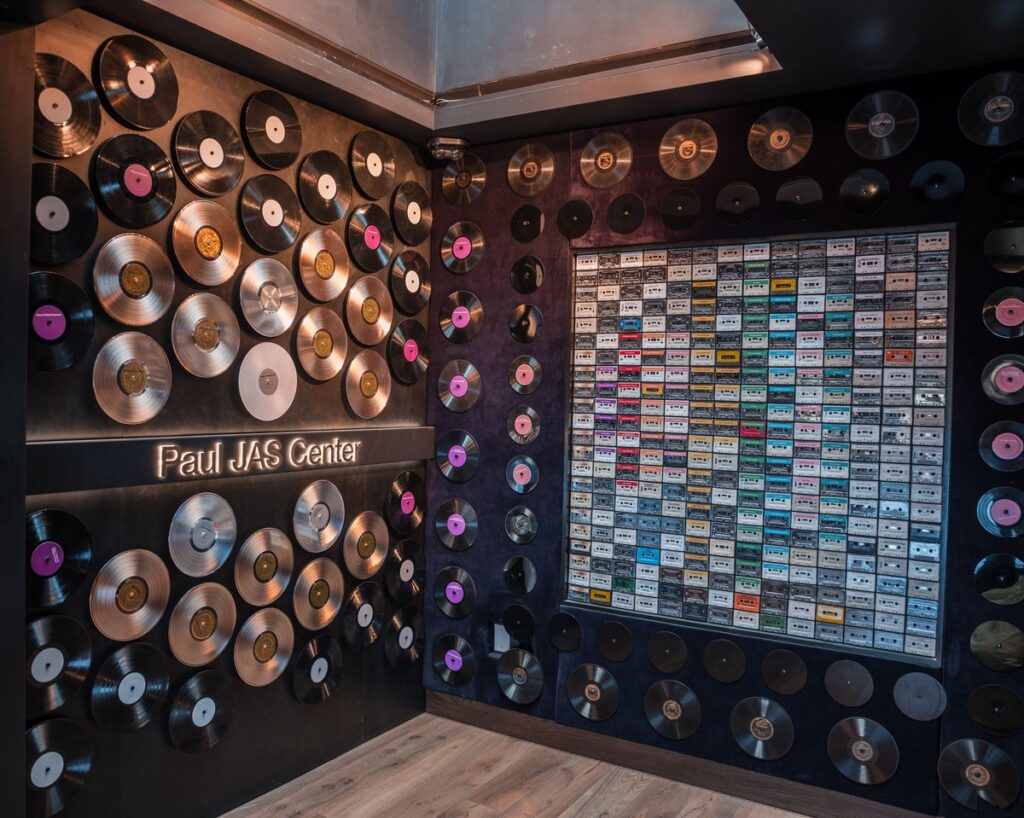
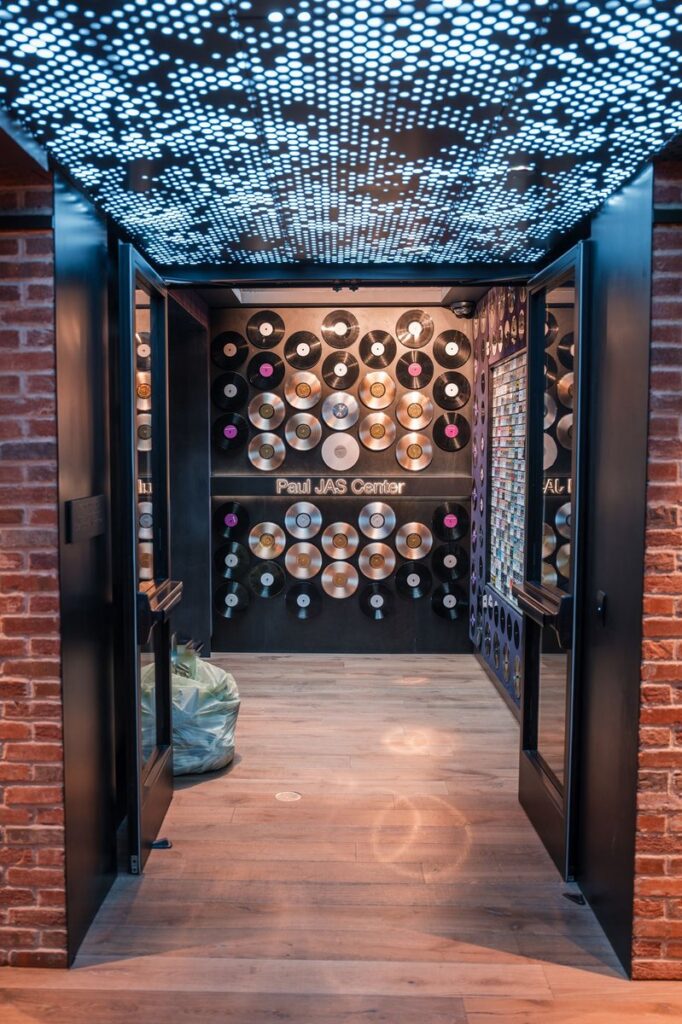
This context shapes how Paul JAS Center Aspen event photography begins. The entrance itself is a photograph. The hallway features walls lined floor to ceiling with vinyl records and platinum discs. Framed photographs of performers who played Aspen over the decades line the brick. A grid of cassette tapes covers an adjacent wall. The corridor ceiling is a perforated LED panel that glows with moving light. It makes a strong first impression and a natural photographic moment at the start of any event.
The Main Stage and Event Space
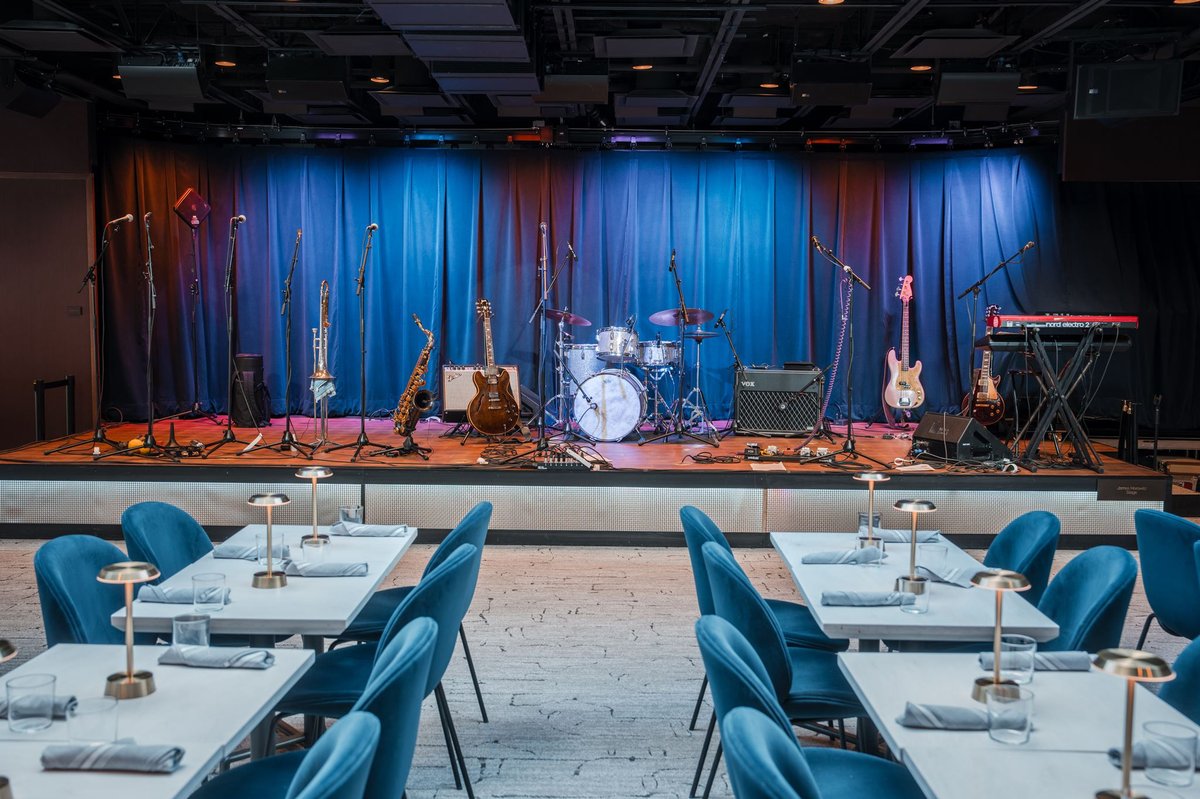
The primary room centers on a dedicated performance stage with a full rigging grid overhead. The stage sits at one end of the room, elevated above the floor. A built-in LED strip runs along the front edge. The house lighting system handles everything from bright conference setups to warm evening washes. Outside vendors rarely need to bring extra gear.
For the Saluda Grade conference, the production team used a deep blue and amber wash across the stage curtain. It held well photographically from virtually every position in the room. That kind of controlled stage lighting is not always a given at Aspen venues. It makes a noticeable difference in how live performance images turn out.
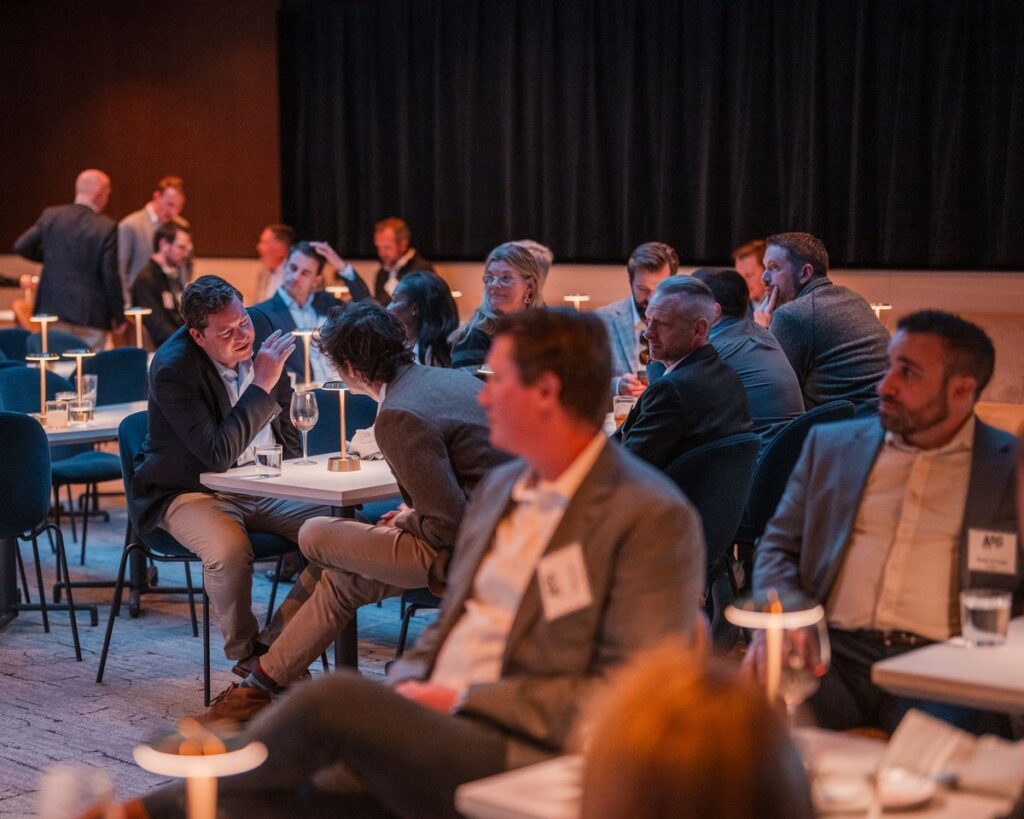
The seating uses square white tables and dark velvet chairs. The furniture feels more contemporary than most mountain event venues. The dark ceiling and warm floor lighting push the room toward an urban feel. It photographs nothing like a typical ski resort conference room.

Lobby, Registration, and Photography Flow
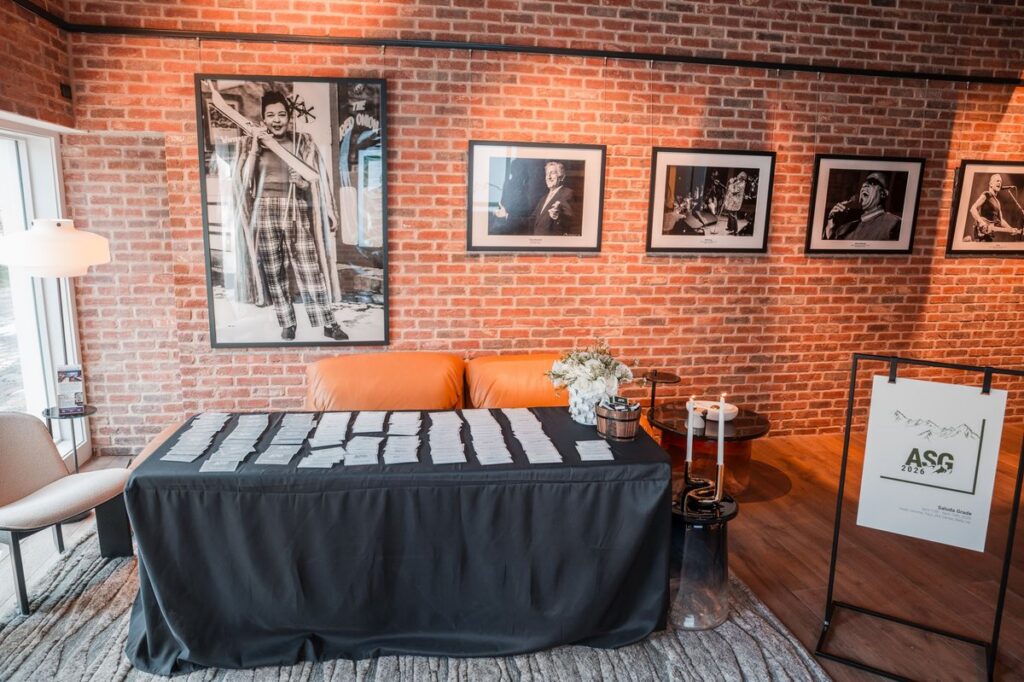
The entry lobby connects the street entrance to the main room. It works as a natural gathering space before events begin. Exposed brick runs throughout. The furniture is warm leather and upholstered seating. Historic black-and-white photography on the walls gives the space a layered feel rather than a generic lobby aesthetic.
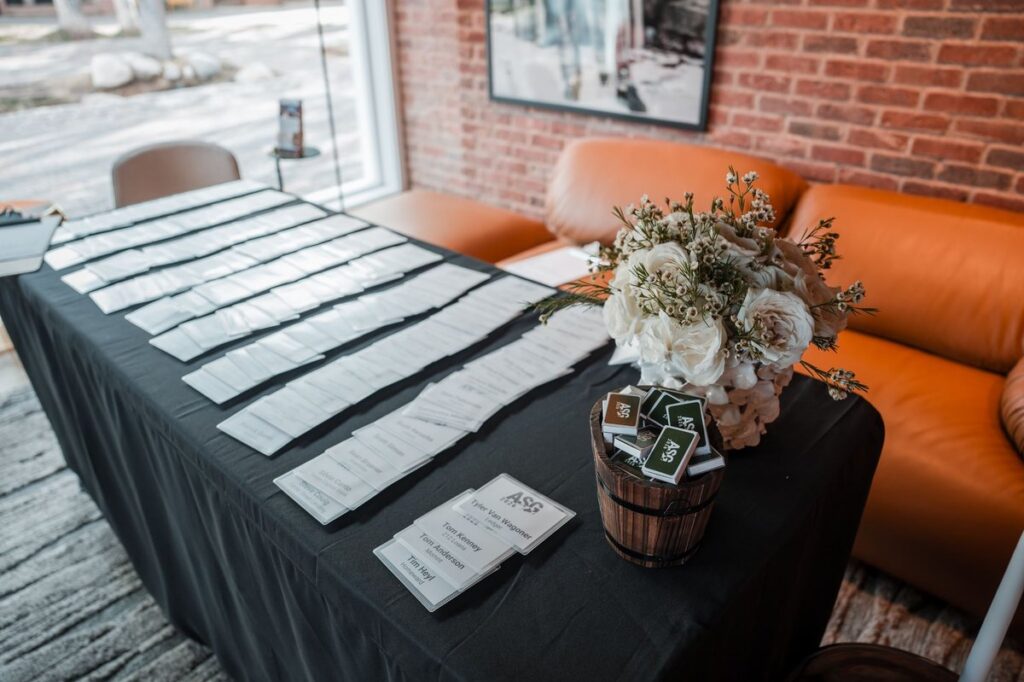
For the April event, registration lined one wall with a long table and name badge arrangements. A fresh floral arrangement read cleanly against the brick. Street-facing windows brought in enough ambient light that early arrival photography needed little supplemental lighting.
The Bar and Beverage Service
The bar is a substantial curved counter with a dark granite top and a clean back-bar behind it. The floral arrangement sat on the counter and read well against the dark cabinetry and brick. A back-lit shelving unit anchors the room visually from across the space.
The bar sits close to the main room. Consequently, guests move between the two areas without losing the program. That spatial continuity matters for evening events. The energy of the room shifts after the formal portion ends, and guests need to stay connected to the space.

The Outdoor Terrace
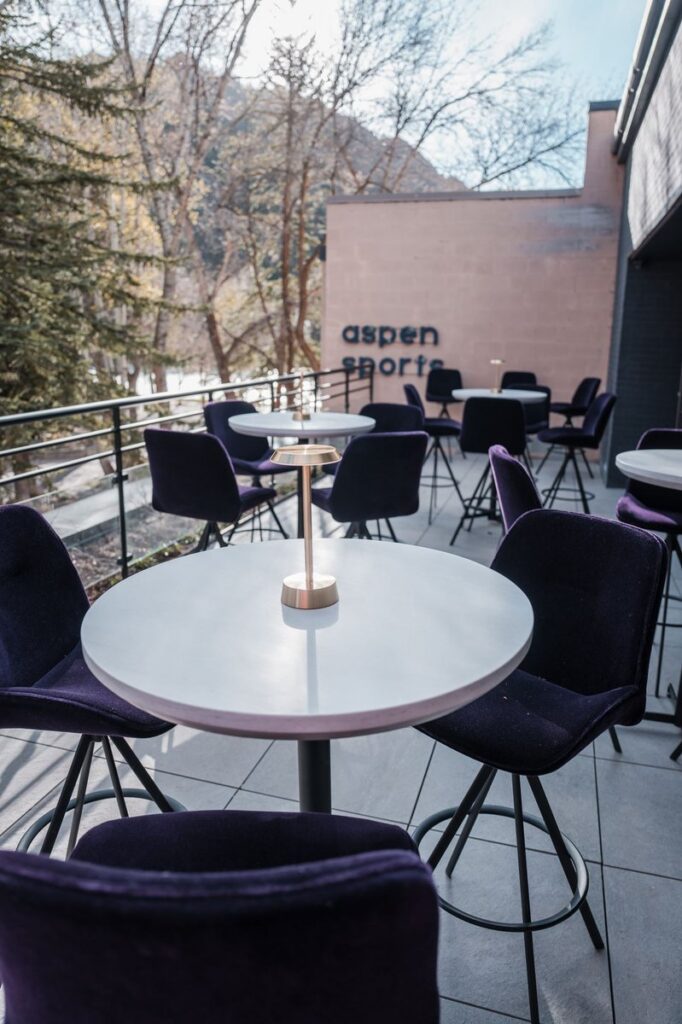
The building has an outdoor terrace on the upper level with views toward the mountain. In April, the trees along Cooper Avenue were still bare. That gave the space a clean sightline toward the ridge. The terrace has small round tables, candlelit lamps, and dark velvet chairs. It works well as an overflow area for evening cocktail hours when the weather cooperates.
In shoulder season, the terrace is usable but weather-dependent. Summer suits it better. The trees fill in and the mountain is more present as a backdrop.
How the Event Moved Through the Space
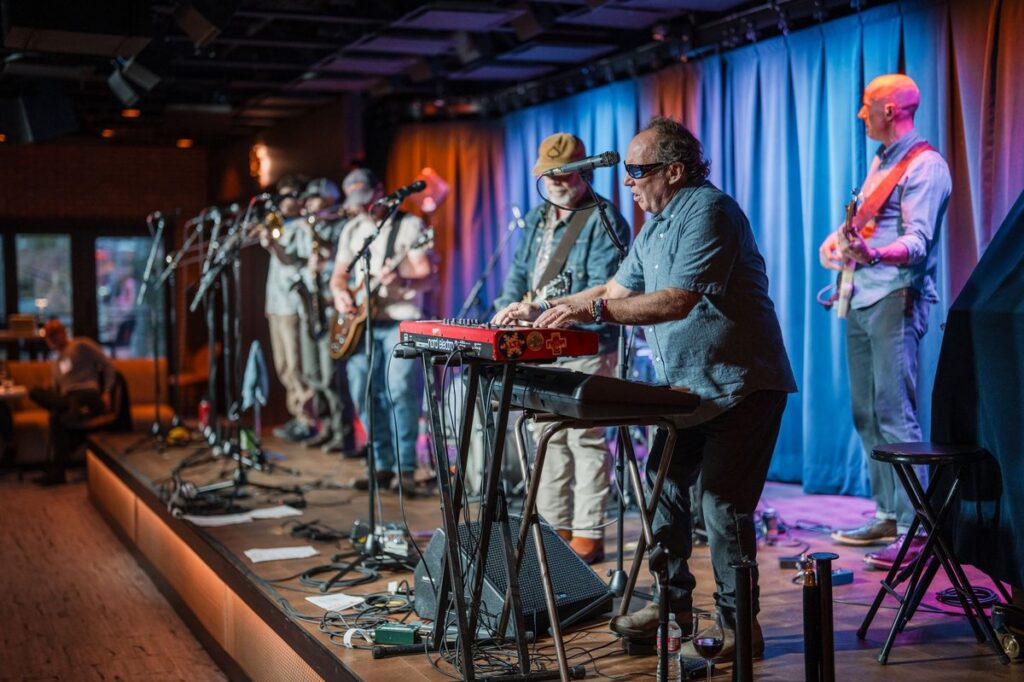
The Saluda Grade conference started with a morning session in the adjacent conference space. The group then moved into the Paul JAS Center for the evening program. That transition was notable. Guests who had sat in chairs all day moved differently once the lighting changed. The band starting to set up helped shift the energy.
The evening started with a cocktail hour in the lobby. Guests clustered naturally around the bar and registration table. Staff prepared the main room in the background. That kind of staging creates activity in the lobby before the main room fills in. It also works well photographically.
Once guests moved into the main room, the transition to the live performance happened gradually. The house lights dropped. The stage lighting came up. The band began while people were still at their tables. The room’s acoustic design kept the music present without stopping conversation. That balance is harder to achieve than it sounds. It makes a real difference for how guests engage with the space. That flow is also what makes Paul JAS Center Aspen event photography feel candid rather than staged.
What to Know Before Booking Aspen Event Photography
A few practical notes for planners considering the Paul JAS Center.
First, the stage production capability is above average for a venue this size. If a live band is part of the program, the room handles it cleanly. There are no compromises from staging a band in a ballroom or tent.
Second, the entrance corridor through the record room creates a defined arrival experience. That hallway functions as a natural photography moment. Most Aspen venues do not offer anything like it. It is therefore worth building into the event timeline.
The main space works well for groups between roughly 80 and 200 guests. For larger Aspen conferences, the JAS Center works better as an evening destination. It is not built to serve as an all-day primary venue.
Parking downtown on a spring event night in Aspen follows the usual pattern. Guests walking from hotels or using the pedestrian mall have easy access. If attendees come from Snowmass or down-valley, account for peak traffic windows at the end of the ski day.
The staff was quick and attentive throughout the day. While the venue is still in its early operational period, the team’s responsiveness kept the logistics manageable.
For Paul JAS Center Aspen event photography at the corporate level, the space needs less setup than most mountain venues. It also needs less supplemental lighting because the space is built with production in mind. That matters for efficiency and for how the final images look. If you want to explore coverage options for your event, we are happy to talk through what that looks like.
FAQ: Paul JAS Center Aspen Corporate Event Photography
Where is the Paul JAS Center located?
The Paul JAS Center sits inside the historic Red Onion building on Cooper Avenue in downtown Aspen, Colorado. It is within walking distance of most Aspen hotels and the pedestrian mall.
What size events does the Paul JAS Center accommodate? The main event space works well for groups of roughly 80 to 200 guests. Setup options include theater style, banquet, or standing reception. The lobby and terrace also add overflow space for cocktail hours.
Does the Paul JAS Center have a stage for live music?
Yes. The venue has a dedicated performance stage with professional rigging, a full sound system, and programmable lighting. It is one of the few Aspen venues built specifically to support live band performances as part of a corporate or private event.
Is the Paul JAS Center good for corporate events?
Based on the April 2026 Saluda Grade conference, the venue works well for corporate gatherings that mix panel discussions, networking, and an evening entertainment component. The ability to move from daytime conference to evening event within the same building is a strong logistical advantage.
How does the Paul JAS Center compare to other Aspen event venues?
The JAS Center is more accessible in price than many resort-owned Aspen event spaces. The music and arts heritage built into the design gives it a character that corporate conference rooms and hotel ballrooms typically do not have. To learn more about how we work and what we cover, or to talk through coverage for an upcoming event, reach out here.


