

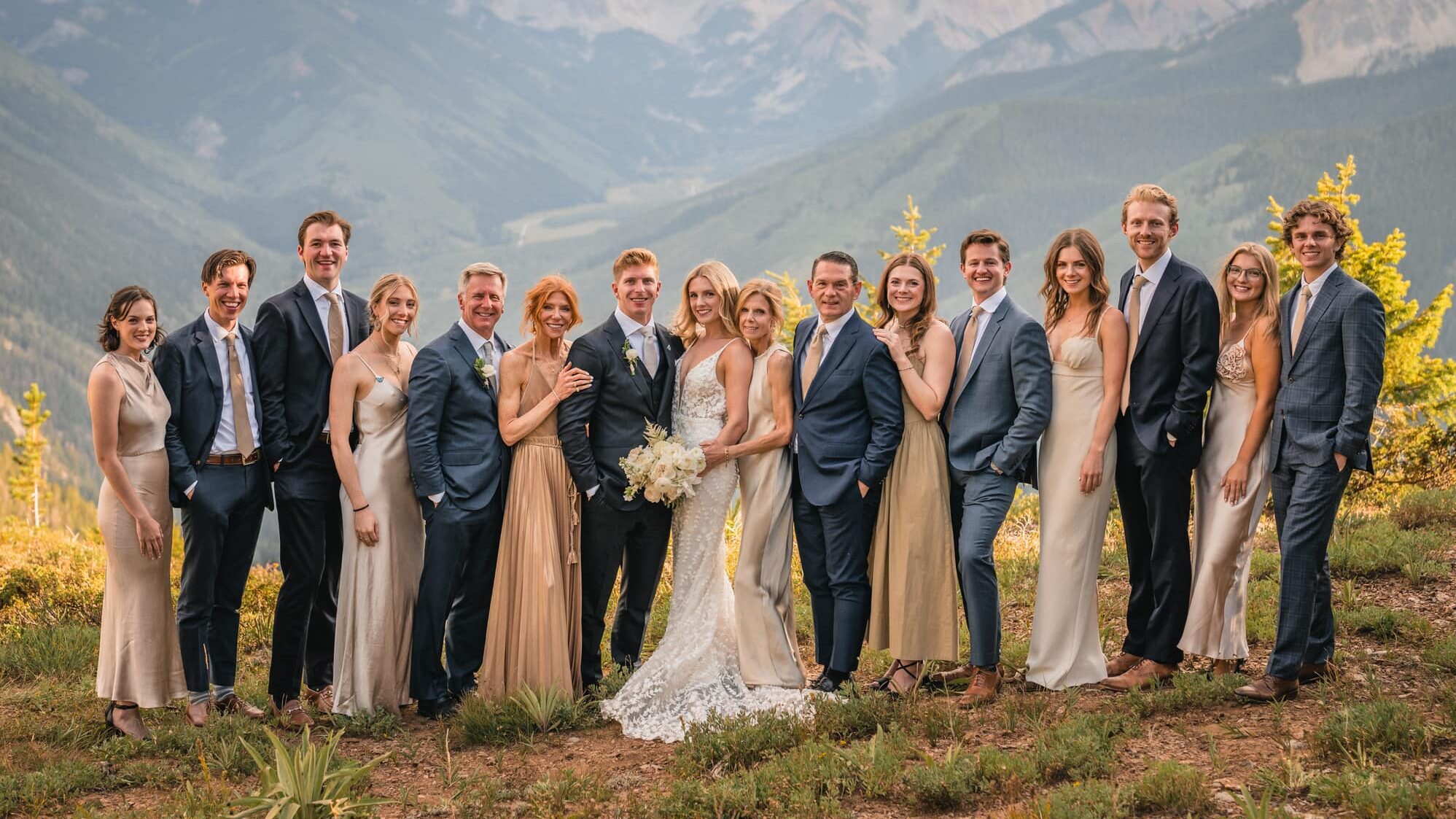
Hiring an Aspen wedding weekend photographer is different from booking coverage for a single event. Most wedding weekends here involve multiple venues, multiple events, and two or three days of shifting energy before anyone gets to the ceremony. Understanding how coverage actually works across those days helps couples make better decisions before they book.
This covers what to expect from multi-day photography and film coverage: how each event type photographs differently, what the pacing looks like, and how to think about structuring your booking.
What Multi-Day Coverage Means in Practice
Multi-day coverage is not a longer version of a wedding day package. Each event is its own thing, with its own lighting conditions, guest energy, and coverage goals. A welcome party on a Thursday evening at a downtown Aspen restaurant photographs completely differently than a Saturday ceremony at a ranch property off Highway 82.
When coverage spans multiple events, the job is to approach each one with fresh eyes while also producing a cohesive set of images and footage across the entire weekend. That consistency matters more than most couples realize until they see the final delivery.
It also means physically moving between venues across the valley, sometimes on consecutive days. Locations in the Roaring Fork Valley are spread out. Parking in downtown Aspen is genuinely difficult in peak season, and the valley has its own traffic patterns that change depending on time of day and time of year. The City of Aspen’s transportation page gives a useful overview of how movement through the area actually works. An out-of-town photographer working multi-day coverage will often run into logistical friction that a local does not. Knowing where to park, how early to arrive, and when RFTA routes or shuttle timing will affect guest movement is something that comes from regularly working the valley, not from a quick map search.
How Each Event Type Photographs Differently
Welcome Party
Welcome parties tend to be loosely structured. Guests are arriving, getting settled, reconnecting after travel. The energy is warm but unfocused in a good way. Coverage here is mostly candid: people greeting each other, moving through a venue, settling into conversations. Formal direction is rarely needed and usually feels out of place.
Lighting conditions vary a lot depending on when the event starts and where it is held. An early evening welcome party at an outdoor venue in summer can still have strong directional light. An indoor dinner in a dark restaurant requires a different approach entirely. Knowing the venue ahead of time helps significantly.
The welcome party typically produces fewer images than the wedding day, and that is expected. The goal is real documentation of how the weekend started, not a full editorial shoot.
Rehearsal Dinner
Rehearsal dinners are usually more intimate than anything else on the weekend schedule. The guest list is smaller, the room is closer, and the emotional temperature is often higher than people expect. This is frequently when toasts happen that do not make it to the wedding day. Speeches feel less rehearsed. Reactions are more genuine.
From a coverage standpoint, the challenge is working in tighter spaces without disrupting the pace of the meal. Many rehearsal dinner venues in Aspen are small enough that camera presence can feel more obvious. Discretion and timing matter here more than technical setup.
Wedding Day
Wedding day coverage is its own full subject. The wedding reception timeline guide covers how the day typically flows from portraits through dancing. A separate post walks through the ideal wedding day timeline in more detail. The key difference in a multi-day context is that by the time the wedding day starts, there is already an established working rhythm with the couple and guests. That familiarity shows in the images.
Venue Logistics and the Local Advantage
Multi-day coverage almost always means multi-venue coverage. Events might be spread across downtown Aspen, Snowmass, Basalt, or further out in the valley. Each location has its own access considerations, parking situation, and travel time from the previous event.
For a photographer or videographer who lives and works in the valley, that knowledge is just part of the job. For someone traveling in, it is a variable that can create coverage gaps if it is not planned for carefully. If seamless transitions between events across different locations matter to you, it is worth asking any vendor you interview how familiar they are with the area.
Some couples also consider adding a second photographer or second camera for events that are happening simultaneously in different locations. For a closer look at how event coverage across the valley is typically handled, that page has more detail on how we approach multi-location work.
Coverage Team Structure
Multi-day coverage sometimes leads couples to assume they need the same configuration across every event. That is not always true. A smaller welcome party might work well with a single photographer. A wedding day with simultaneous getting-ready coverage at two locations usually requires two people at minimum.
That said, having additional coverage across all events is usually the better choice when budget allows. The moments that happen between scheduled events tend to be some of the most natural images from the weekend. Those happen because someone was already there.
One thing that comes up less often but matters: you will be spending multiple days with your photography and film team. The wedding day relationship is often talked about, but with multi-day coverage, that dynamic starts earlier and runs longer. Working with people who are easy to be around, who other vendors are comfortable with, and who know how to stay present without being disruptive makes the weekend feel different. If that chemistry is not there from day one, it tends to show across all three days.
How to Structure Your Booking
Most multi-day coverage is built as a custom package rather than a flat add-on. The number of hours, number of people, and number of events all factor into how coverage is scoped.
A few things worth clarifying early in that conversation:
First, confirm whether travel between venues within the valley is factored into the quoted time. For events that are geographically close, this is usually minor. For events that require driving from one end of the valley to the other, it can add up.
Second, think through what deliverables matter most for each event. Some couples want full edited galleries from every event. Others primarily care about the wedding day and want lighter documentation for the surrounding events. That distinction affects how coverage is structured and priced.
Third, think about whether film coverage makes sense across all events or just the wedding day. Some couples fold in coverage like instant event photography for a welcome party or rehearsal dinner, where guests can take something home that night. Others keep film work focused on the ceremony and reception. Neither approach is wrong. It comes down to what you actually want from each night.
Frequently Asked Questions
Do we need two photographers for every event in a multi-day wedding weekend?
Not necessarily. Smaller events like welcome parties and rehearsal dinners can often work well with a single photographer, depending on guest count and venue layout. The wedding day itself, especially if getting-ready coverage is happening in two locations simultaneously, typically benefits from two people.
How far in advance should we book multi-day coverage in Aspen?
Popular summer and fall weekends in Aspen book well in advance. If you know your Aspen wedding weekend photographer schedule, it is worth discussing multi-day coverage at the same time you book your wedding day coverage rather than as an afterthought later.
Does it matter if the photographer is local to Aspen for multi-day coverage?
Local familiarity makes a practical difference when coverage spans multiple venues across the valley. Parking, travel timing between locations, and knowledge of specific venues all become more relevant when you are moving between events across two or three days. It is worth asking any vendor you consider how much they have worked in the specific area where your events will take place.


