

The best wedding reception timeline keeps the formalities compact, gives guests a clear sense of momentum, and protects the dance floor once it opens. In most cases, that means grouping the grand entrance, first dance, dinner, toasts, parent dances, and cake cutting into one intentional sequence—then letting everyone celebrate without additional speeches or announcements interrupting the party.
After photographing and filming receptions throughout Aspen and the Colorado mountains, I have found that a schedule is not about controlling the couple. It is about respecting the guests who traveled to be there. Couples can still have a relaxed evening, but guests notice when dinner, speeches, and transitions repeatedly run late.
If you are planning the entire wedding day rather than only the reception, start with our complete wedding day timeline guide.
Written and reviewed by Dale Mitchell, Aspen wedding photographer and filmmaker at Summit Photo & Film. Last reviewed August 2026.
The Wedding Reception Order I Recommend
My preferred order is simple: seat the guests, complete the entrance and dances, serve dinner, place every toast in one block, finish the remaining formalities, and open the dance floor. Knocking these moments out in a coordinated sequence keeps guests from getting bored and preserves the emotional impact of each event.
- Cocktail hour
- Guests seated
- Wedding party entrance and grand entrance
- First dance
- Welcome or blessing
- Dinner
- All toasts in one continuous block
- Short parent dances
- Cake cutting
- Open dancing without additional formalities
Sample Four-Hour Wedding Reception Timeline
This example runs from 6:00 to 10:00 p.m. and includes cocktail hour. Confirm dinner timing with your caterer because plated, buffet, and family-style service move differently.
| Time | Event | Photo and film consideration | Common delay |
|---|---|---|---|
| 6:00 p.m. | Cocktail hour and scheduled family photos | Use a preapproved family-photo list and keep extra requests for later | Unplanned family combinations or transportation |
| 7:00 p.m. | Guests seated | Allow the planner or DJ enough time to move everyone into place | Guests still at the bar or venue setup running late |
| 7:10 p.m. | Wedding party and grand entrance | Move directly into the first dance while attention is already on the couple | Missing wedding-party members or unclear staging |
| 7:20 p.m. | First dance and brief welcome | Keep the transition clean so cameras and guests know where to look | Last-minute announcements |
| 7:30 p.m. | Dinner service | The couple should eat before making table visits | Kitchen delays or too many table visits |
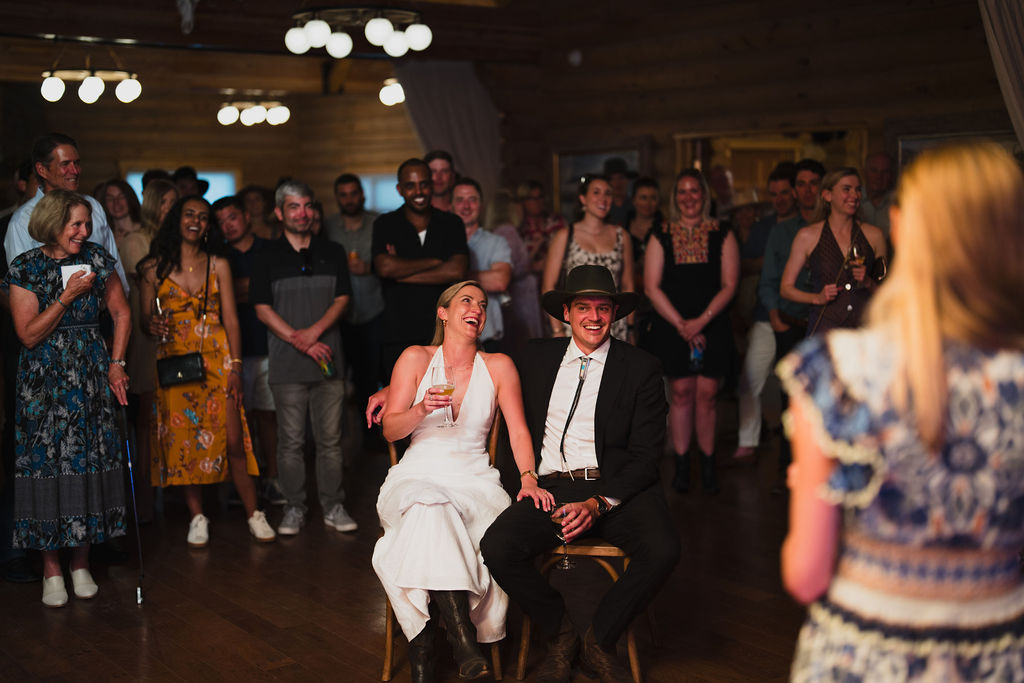
| 8:15 p.m. | All toasts together | Three or four speakers at five minutes or less keeps the emotional arc intact | Long or staggered speeches |
| 8:40 p.m. | Parent dances and cake cutting | Parent dances can be about 60 to 90 seconds each; cake can be private | Searching for family members or moving guests repeatedly |
| 8:50 p.m. | Open dance floor | Invite guests out immediately and avoid later microphone interruptions | Another speech, announcement, or formal event |
| 9:20 p.m. | Optional sunset portraits | Five to ten minutes is usually enough; adjust for the actual mountain light | Waiting for a literal horizon sunset that the peaks block |
| 9:30–10:00 p.m. | Uninterrupted dancing and final song | Keep the couple on the dance floor whenever possible | A complicated, unassigned grand exit |
A High-Energy Entrance Variation
Sometimes the strongest energy of the night arrives immediately after the grand entrance. The couple is excited, the room is focused on them, and guests are ready to move. In that case, finish the first dance, have the couple wave everyone onto the floor, and run a short 15- to 20-minute dance set before dinner.
This can be especially effective with an energetic DJ or an interactive moment such as the couple using CO2 guns from the stage. The tradeoff is that dinner will interrupt the dancing. If your priority is one continuous party that builds through the end of the night, keep the first dance brief and wait to invite everyone out until the formalities are finished.
Keep Every Toast in One Block
Staggered speeches are one of the most common reception-timeline mistakes I see. One toast happens before salads, another arrives between courses 20 minutes later, and a third comes later in the evening. Couples often expect that approach to add variety. In practice, it usually makes the reception feel dragged out, weakens the emotional impact, and becomes difficult to coordinate—especially for film coverage.
Schedule every speech together. I recommend three or four speakers, with each person limited to five minutes. An exceptionally funny or heartfelt speaker may reach seven minutes, but that should be the exception. Groups of speakers should be even shorter because handoffs and multiple stories almost always take longer than expected.
Long speeches do more than put dinner behind. Guests can feel that their time is not being respected. Give every speaker a clear limit before the wedding and ask the planner or DJ to enforce the order.
Prevent Family Photos From Delaying the Reception
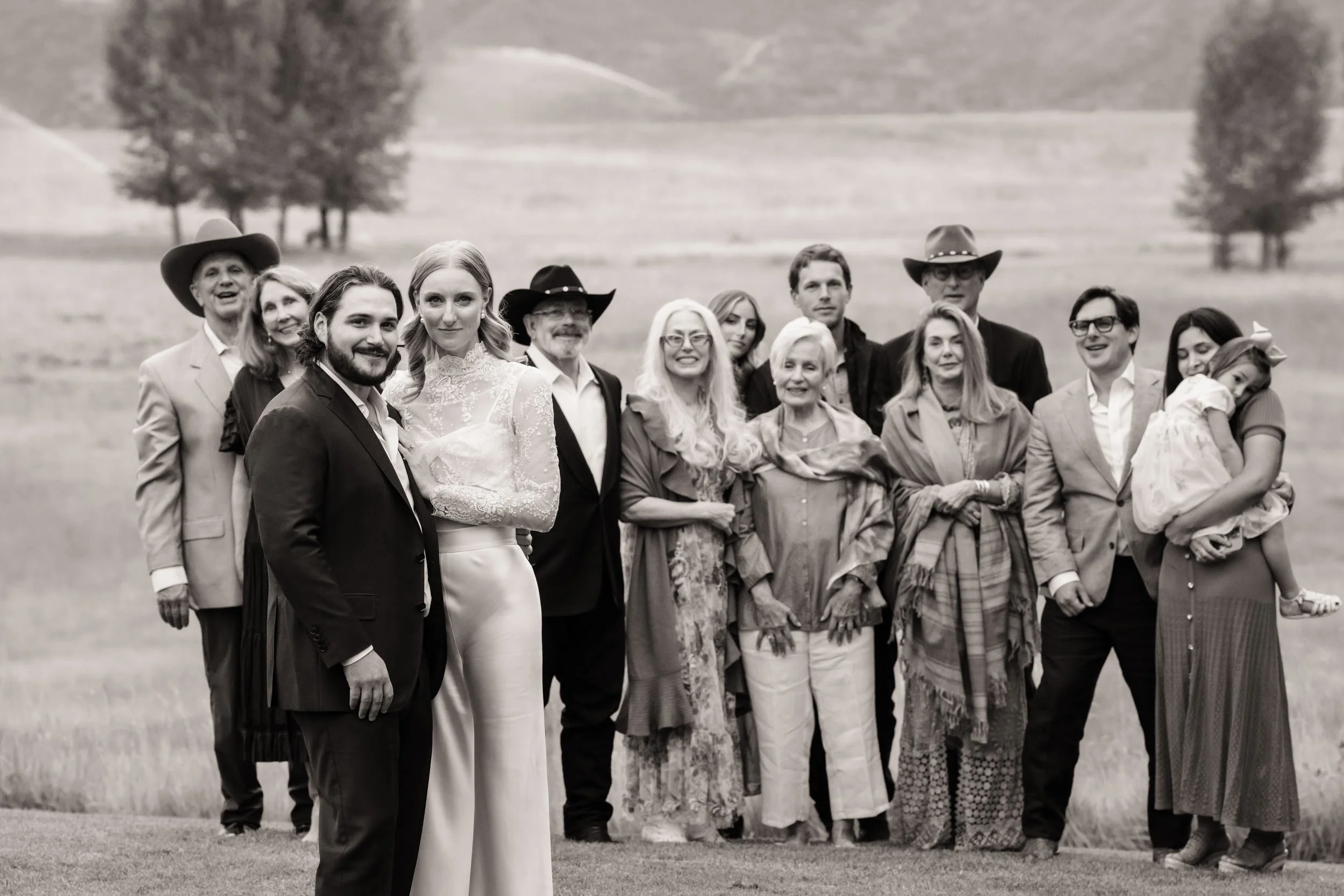
Family photos can quietly consume cocktail hour when relatives add combinations in the moment. A written, preapproved list is the best protection. I especially appreciate when a couple tells me to follow that list strictly. Then, if someone requests several additional groupings, I can politely explain that we need to stay on schedule and revisit optional photos later.
This protects more than the reception start time. Long formal-photo sessions are draining for the couple—often especially for the partner who is ready to leave the lineup and join the celebration. A concise list preserves their energy for the rest of the night.
Use Short Parent Dances and Finish Cake Before Open Dancing
Parent dances are still meaningful, but they do not need to use an entire song. Around one to one-and-a-half minutes per dance is usually enough to create an emotional moment without making either person feel awkward.
I generally recommend cutting the cake before open dancing. Many couples now do it privately, which works well. If cake cutting must happen after the dance floor opens, keep it private and fast. Once the couple leaves the floor and guests are asked to redirect their attention, there is a real risk that the party will lose momentum.
Grand entrances can feel cheesy while planning, but they are excellent for lifting the room and giving the couple a once-in-a-lifetime moment. I would keep the entrance rather than automatically cutting it.
How to Fill—and Protect—the Dance Floor
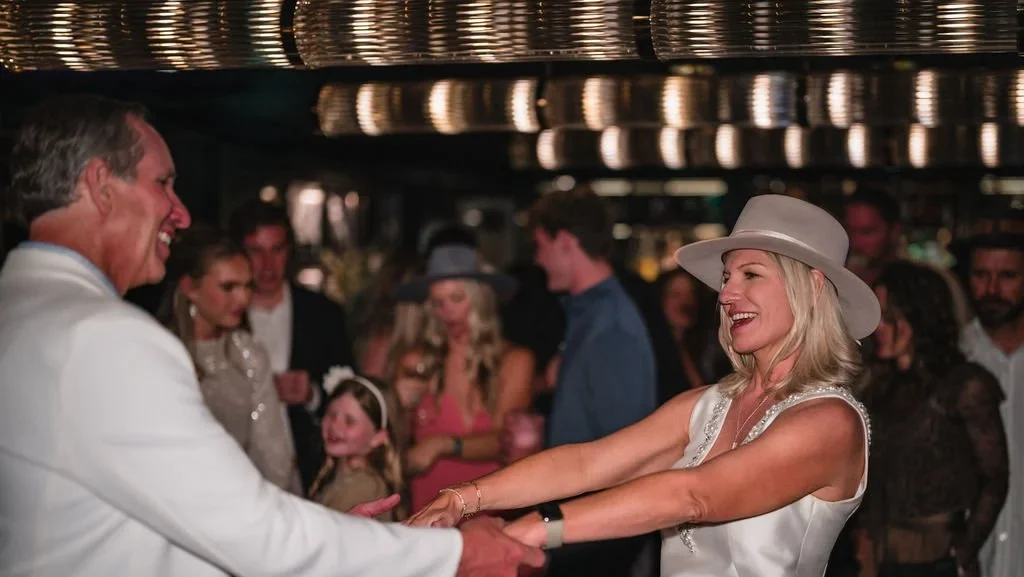
One of the simplest ways to fill the floor is to transition directly from the first dance. As the song ends, the couple can wave their hands and invite everyone to join them. Guests respond to the couple’s enthusiasm more than to a generic announcement.
- Open with a recognizable, high-energy song.
- Keep the couple physically on the dance floor at the beginning.
- Use planned interactive moments, such as CO2 guns, when they fit the event.
- Keep the earlier schedule on time so guests are not already tired or leaving.
- Do not allow an extra toast or “special” microphone announcement after dancing begins.
An unplanned microphone interruption can empty a dance floor almost instantly. Once open dancing begins, let the DJ maintain the energy and move any nonessential announcements earlier.
Plan Only Five to Ten Minutes for Sunset Portraits
By the reception, most couples have already taken many photographs and are ready to be with their guests. I usually need only five to ten minutes for sunset or evening portraits. That is enough to create a different look without turning the session into another long interruption.
In Aspen and other mountain locations, “sunset” often arrives earlier than the published sunset time because peaks block the direct light. You may never see the sun touch the horizon. We can still create beautiful images later in the evening, but the timeline should be based on the venue’s usable light—not only the sunset time shown in a weather app.
Aspen and Mountain Reception Delays to Plan Around
Aspen weddings often use several locations: getting ready at one property, the ceremony at another, and the reception somewhere else. Every move adds transportation, loading, parking, and communication points where the day can slip.
- Transportation: Shuttles, mountain roads, and moving the wedding party can delay guest seating.
- Vendor access: Some venues provide nearby parking; others require vendors to park farther away, unload at a station, and carry gear to the event space. Build that time into setup.
- Weather: Forecasts frequently look worse than the day becomes, but rain plans and setup adjustments can still delay florists, rentals, catering, and the reception.
- Altitude: Guests may tire sooner, and alcohol can affect them faster. Water, food, and an on-time schedule matter.
- Vendor dependencies: One late setup can block the next team from starting, creating a chain of delays.
Why a Timeline Helps Guests, Not Just Vendors
I once covered a wedding where the bride needed more time to write her ceremony vows. Delaying the ceremony was the right personal decision in that moment, and a strong vendor team kept much of the day feeling seamless. Dinner was still significantly delayed, though, because every later event inherited that lost time.
It makes sense that couples want their wedding to feel casual and do not want to watch the clock on a deeply personal day. The purpose of a reception timeline is not to remove that freedom. It gives the vendor team a shared plan and prevents guests from spending long periods wondering when they will eat, when speeches will end, or what happens next.
Should You Plan a Grand Exit?
Grand exits can be incredible when they are coordinated well. They are also more complicated than they appear in inspiration photos. By the end of the night, guests may be tired or intoxicated, and gathering everyone with sparklers or props takes time.
If you want one, assign a specific planner or coordinator to lead it and make sure the photographer, filmmaker, DJ, venue, and transportation team all know the plan. Without one person in charge, the exit can become disorganized and feel less special than expected. A final song with the people still on the dance floor is often a simpler ending.
Wedding Reception Timeline FAQ
How long should a wedding reception be?
Four to five hours including cocktail hour works for many weddings. The correct length depends on dinner service, the number of speakers, cultural traditions, venue logistics, and how much uninterrupted dancing you want.
When should the first dance happen?
Immediately after the grand entrance is usually the cleanest transition because the room is already focused on the couple. You can then proceed to dinner or invite guests onto the floor for a deliberate high-energy dance burst.
How long should wedding toasts be?
Aim for three or four speakers at five minutes or less each. Keep every toast in one continuous block rather than separating speeches between dinner courses or throughout the evening.
When should cake cutting happen?
Before open dancing is the safest choice for maintaining momentum. If you prefer a later cake cutting, consider doing it privately so guests can continue dancing.
When should sunset portraits happen?
Schedule five to ten minutes around the venue’s actual usable evening light. In the mountains, direct sunlight may disappear behind the peaks well before the published sunset time.
Planning the full day as well as the reception? Download the printable wedding timeline worksheet for your custom schedule, family-photo list, mountain travel buffers, and reception checklist.
Build a Reception That Feels Relaxed Because It Is Planned
The strongest reception timeline completes the important moments without making the evening feel like a checklist. Keep the formalities together, set firm speech limits, prepare the family-photo list, account for mountain travel and vendor access, and protect the dance floor once it opens.
If you are planning an Aspen or Colorado mountain wedding, contact Summit Photo & Film for photography, film, and timeline guidance. You can also review these questions for your Aspen wedding photographer before choosing coverage.


